Elephant Memory: why do an Elephant Never Forget?
Have you heard of the phrase, Why do elephants never forget? The saying has been around for generations, but what does science actually tell us about elephant memory?An elephant never forgets and have such good memories? Well, it turns out that things are not as simple as in the saying. Recent studies showed that elephants have quite an ability to store important memories concerning their relatives, social networks, sounds, locations, and other aspects of their lives. It is clear that the combination of a very long-life span and social complexity requires a strong memory for elephants.
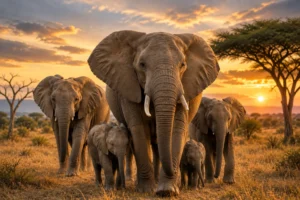
Thus, it would be more correct to talk about the elephants’ good memory abilities.
Why Do Elephants Never Forget?
Elephants have social life and long lifespan. To navigate through environments, they have to keep the memories about all the information that can be useful for finding food, water, recognition of other elephants, self-preservation, etc. Females of African savanna elephants normally live in groups headed by a matriarch, which is the oldest female elephant.
The matriarch has a lot of functions and responsibilities in elephant society, one of which can be connected to its decision-making abilities. It was discovered by the studies done in Amboseli ecosystems of Kenya that old matriarchs are better than young ones at distinguishing threatening situations and reacting to them. Scientists suppose that the age difference is due to the differences in experience and accumulated knowledge. Thus, the experience of an older elephant is an advantage of not only for her, but also for the whole family.
Elephants Have Biggest Brains
Elephants have the biggest brains among terrestrial mammals. An adult elephant’s brain weights around 4–5 kg which is four times heavier than human brain. One of the key structures of elephant brain in terms of spatial and social information processing and memory is the hippocampus.
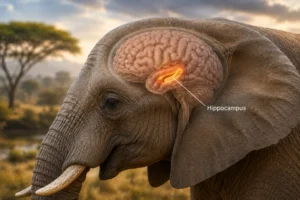
The hippocampus is responsible for learning, memory and navigation processes in many animals. The results of researches concerning elephant brains prove that neural structures of these creatures provide quite sophisticated processing of the above-mentioned information. However, the large brain size of an animal does not guarantee its infallible memory.
What Do Elephants Remember?
Elephants remember useful information.
1.Familiar Elephants
Elephants inhabit societies comprising numerous individuals and families. The research conducted among African elephants suggests that they are able to differentiate between familiar and unfamiliar elephant sounds. In some cases, older matriarchs can be very skilled at this. Being aware of which elephants belong to their family and social group can be helpful to elephants to decide on the interaction with the others.
2.Significant Places
Elephants migrates over vast areas in search of water and food. Recalling the places of the presence of important resources can be extremely beneficial, especially under hard environmental conditions. Among other abilities of elephants’ cognition, researchers suggest that elephants use spatial information on a long-term basis. But claims that elephants can remember a certain path for a definite number of kilometers or decades should not be considered as universal truths. The field of study of elephant spatial memory is quite new.
3.Human Voices
Elephants can also make use of information from human voices. In one renowned experiment conducted among wild elephants in the Amboseli National Park of Africa, the scientists played human voices to the elephant families. Based on the features of the voices such as the age, sex and identity of human group being conveyed through the voices, the elephants reacted differently. It indicated that elephants had the capability of using vocal information to evaluate any potential danger from humans. This is one of the remarkable cases where elephants have learned information from sound and made use of it.
Scientists are still studying why do elephants never forget important information about their family, surroundings, and experiences.Elephants are also considered among the smartest animals in the world, thanks to their impressive learning, problem-solving, and social abilities.
Do Elephants Remember Smells for Longer Period?
Elephants are gifted with strong sense of smell which makes them to collect information about the surrounding and other elephants.In one scientific study, whether or not African elephants could remember the smell of their relatives after many years of separation was explored. The study involved mother-daughter elephant pairs that had been separated for two and 12 years, respectively.
The subjects were offered to sniff scents collected from both familiar and unfamiliar elephants. surprisingly, all four elephants are managed to recognize the scents of their separated relatives, even the ones they had not met for 12 years.
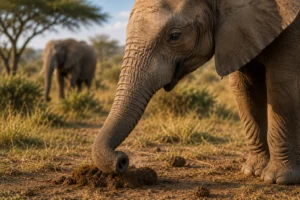
Based on this study, elephants demonstrated an ability to have olfactory memory that lasts up to 12 years. It is significant that the recognition of the familiar individual would help elephants preserve their complicated relationships. However, taking into account the small sample size of the study, one cannot state that all elephants would remember the scent for 12 years precisely.
Scientific source: Long-term olfactory memory in African elephants — published in Animal Cognition and available through the U.S. National Library of Medicine’s PubMed Central.Read the full scientific paper on PubMed Central
Do Elephants Memories Help During Drought?
Drought may cause serious problems for elephants. In cases of reduced rainfall, finding food and water sources becomes very challenging. An elephant family has to make a number of important decisions concerning relocation and movements.
According to the studies of long-term elephant populations, age and experience may play an important role in elephants’ adaptation to environmental changes. Ageing females have proven to have good social knowledge and coping with threats, while drought causes high mortality rates especially among juvenile elephants. We need to be careful while believing in the legend about “old elephants remembering hidden water spots from decades ago and helping the herd”. The truth may be far more complex than the legend.
Elephants use their learned knowledge, experience, social information, environmental cues and movement behavior. The researchers try to understand the degree of elephants dependence on their memory and rather than on current environment.
How Older Matriarchs Assist Families
The matriarch is the known example of elephant memory. In an elephant family the matriarch is the oldest female. Researchers studying elephants in Amboseli have been able to establish that families with older matriarchs are more adapt at recognizing the level of threat from lions.
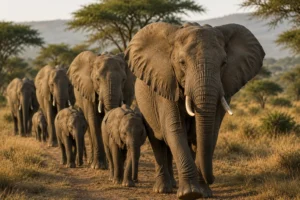
Older matriarchs can differentiate between harmless and dangerous lions better than younger matriarchs. This points to the fact that experience counts. The older matriarch may find situations that a younger elephant has never been faced so that they influence the behavior of the whole family.
Does Elephant Memory Play a Role During Drought Periods?
Drought periods are hard for elephants. If the rainfall is lower than usual then finding food and water could be quite challenging. Elephants need to make certain decisions related to migration. Long-term elephant research proved that age and experience play a role in responding to challenges by elephant herds. Old matriarchs have been linked with good social knowledge and better reactions to challenges.
Moreover, high levels of mortality during severe droughts have been noted particularly among juvenile elephants. Elephants rely on learned knowledge, experience, social knowledge, environmental clues, and movement. There is ongoing research to determine how much elephants rely on memory and current environment information for orientation purposes.
Do Elephants Mourn Their Dead?
Elephants are known for their special and documented interest in their deceased kin. Scientists noticed how elephants were coming close to elephant corpses, touching them, sniffing them, and investigating the dead body and why do elephants never forget their dead. Also, there are cases when some elephants returned to carcasses or were interested in bones and tusks. Such behaviors were described in both African and Asian elephants. However, there is one important instance here. We cannot confirm that elephants experience grief in the same way as humans.
The researchers observed different behaviors that can indicate distress, concern, and interest in the dead but cannot confirm whether it is the same emotional experience as humans feel. Accordingly, another study reported that African elephants displayed a special interest in elephant skulls and ivory, but they were not able to distinguish the remains of their family from the remains of non-related elephants. Elephants demonstrate unique and sometimes long-term interest in their dead relatives, but scientists continue researching the meaning of such behavior.
Can small Elephants Learn from Their Older Elephants?
Yes. little elephants take years learning how to survive. Baby elephants live with their family who knows many skills and Learning can be done through observation, interaction, and experience. This explains why elephant families are effective learning communities.

If a matriarch elephant is lost, the consequences are not limited to that elephant alone. Studies have shown that the loss of experienced older females can affect the structure of the elephant family, as well as the access to information.
Amazing Facts About the Memory of Elephants
- Elephants have the largest brain among all the existing land mammals.
- The brains of these creatures include certain parts responsible for memory and spatial abilities, namely the hippocampus.
- African elephants are able to make a distinction between certain human voices.
- Matriarchs may have important social information helpful to their families.
- Studies have revealed that some African elephants can remember humans they knew up to 13 years after their last meeting, though the research was conducted on only two elephants.
- Experience and social information can affect the way elephants’ families cope with certain situations.
- Elephants are known to examine dead members of their kind, but the meaning of these actions is not fully understood yet.
Why Elephant Memory Matters
Elephant memory and why do elephants never forget is not simply a fascinating animal fact. It can be important for understanding how elephant societies work. Older elephants may carry knowledge that has accumulated over many years. When experienced individuals disappear, a family can lose part of its social knowledge. The reason to protect experienced adults is to maintaining stable family groups and also helps in preserving knowledge within elephant societies. Elephants do not have perfect memories but their memories can help them recognize individuals and understanding social relationships ,respond to danger also in navigating their surroundings and pass useful knowledge from one generation to another. That may be the real reason elephants have earned their reputation for remembering.
Something about the Science
Elephants are highly intelligent animals and why do elephants never forget is the subject of ongoing scientific studies. Some popular facts about elephant memory have been made up out of observations, stories, or misinterpretations of the results of scientific studies. That is why it is essential to differentiate between what has been scientifically proven and what is still being researched by scientists. The more we learn about these amazing animals, the more fascinating the role of memory in their lives appears not because elephants “never forget,” but because it is tightly linked to everything in their lives.