Snail vs Slug: What Is the Difference
Introduction
Have you ever seen a small, slimy creature crawling across a leaf after a rainy day and wondered whether it was a snail or a slug? Since both animals move slowly, have soft bodies, and leave behind shiny slime trails, it’s easy to confuse them. Many people ask, “What is the difference between a snail and a slug?” or “Are slugs snails without shells?”
The answer is simple: although snails and slugs are closely related, they are not exactly the same. In this snail vs slug guide, you’ll learn the key differences between these two fascinating gastropods, including their shells, body structure, habitat, diet, movement, and survival strategies. Both belong to the class Gastropoda, a large group of mollusks that includes thousands of species found on land, in freshwater, and in the ocean. The biggest difference is that snails have a hard external shell, while most slugs do not. However, their differences go far beyond their shells.
In this guide, you’ll learn everything about the difference between snail and slug, including their body structure, habitat, diet, life cycle, similarities, and why these amazing creatures are important for nature.
What Is a Snail?
A snail is a soft-bodied animal belonging to the mollusk family. Its most recognizable feature is the hard, spiral shell that grows with it throughout its life. Contrary to popular belief, a snail cannot leave its shell because the shell is attached to its body.
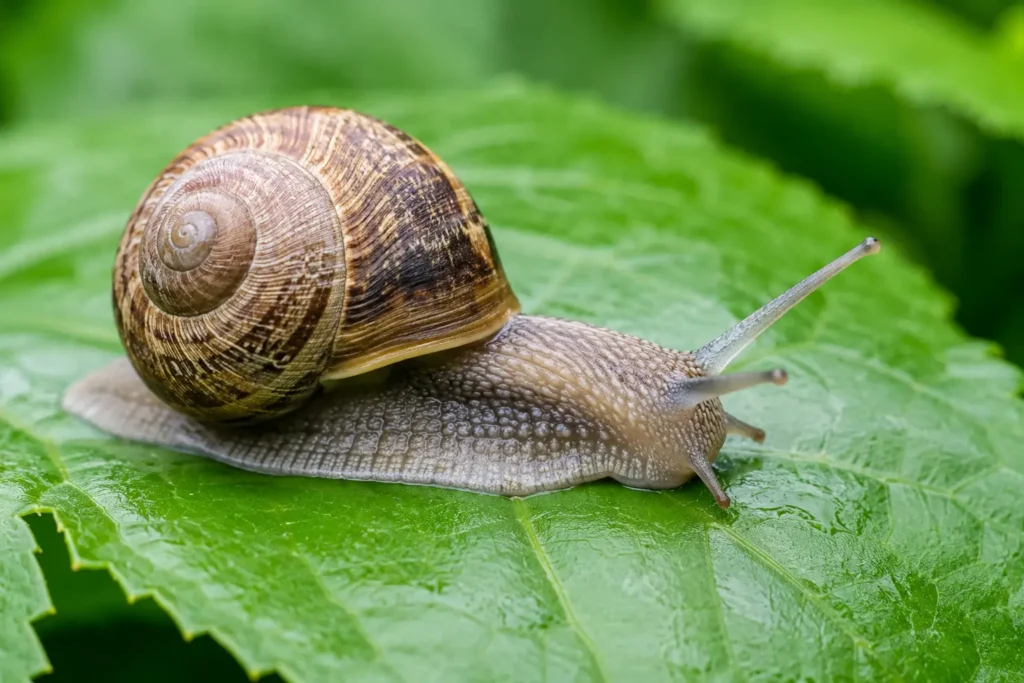
The shell protects the snail from predators, prevents water loss during hot weather, and provides a safe place to hide whenever danger approaches. When threatened, a snail pulls its entire body inside its shell and seals the opening with mucus until it is safe to come out again.
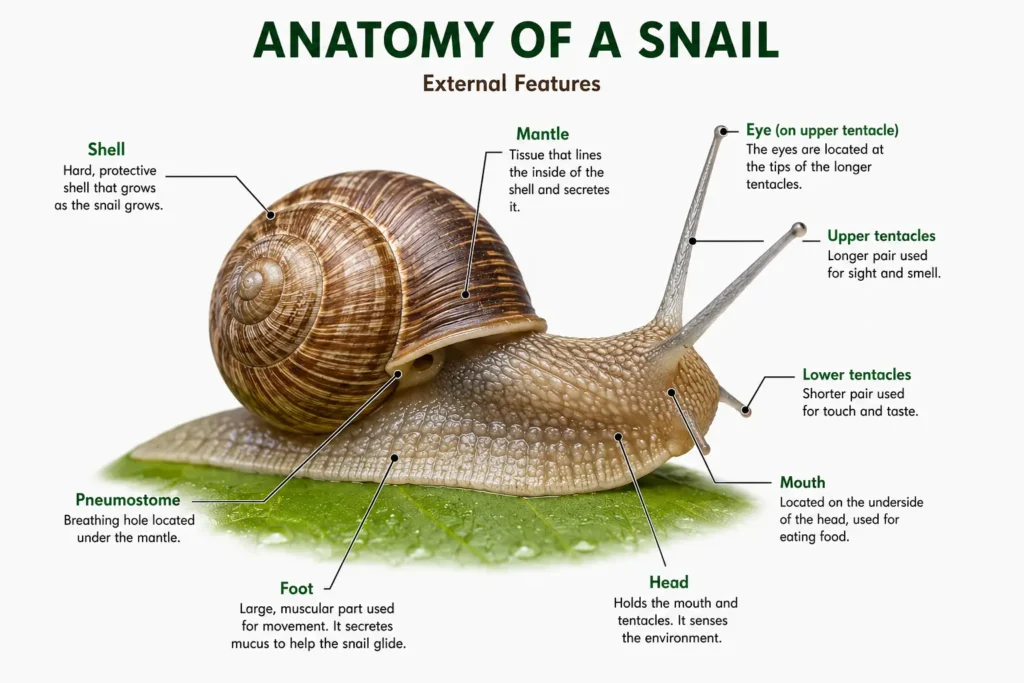
Snails move using a large muscular foot located on the underside of their body. As they move, they release a slippery layer of mucus that reduces friction and helps them glide smoothly over rough surfaces.
Snails are found in many habitats, including gardens, forests, wetlands, grasslands, mountains, deserts, freshwater ponds, rivers, and oceans.
Main Characteristics of a Snail
-
Hard spiral shell
-
Soft body
-
Two pairs of tentacles
-
Eyes on the upper tentacles
-
Muscular foot for movement
-
Produces slime
-
Mostly active during cool or damp conditions
What Is a Slug?
A slug is another type of gastropod mollusk and is one of the closest relatives of the snail. At first glance, slugs look very different because they usually lack a large external shell.
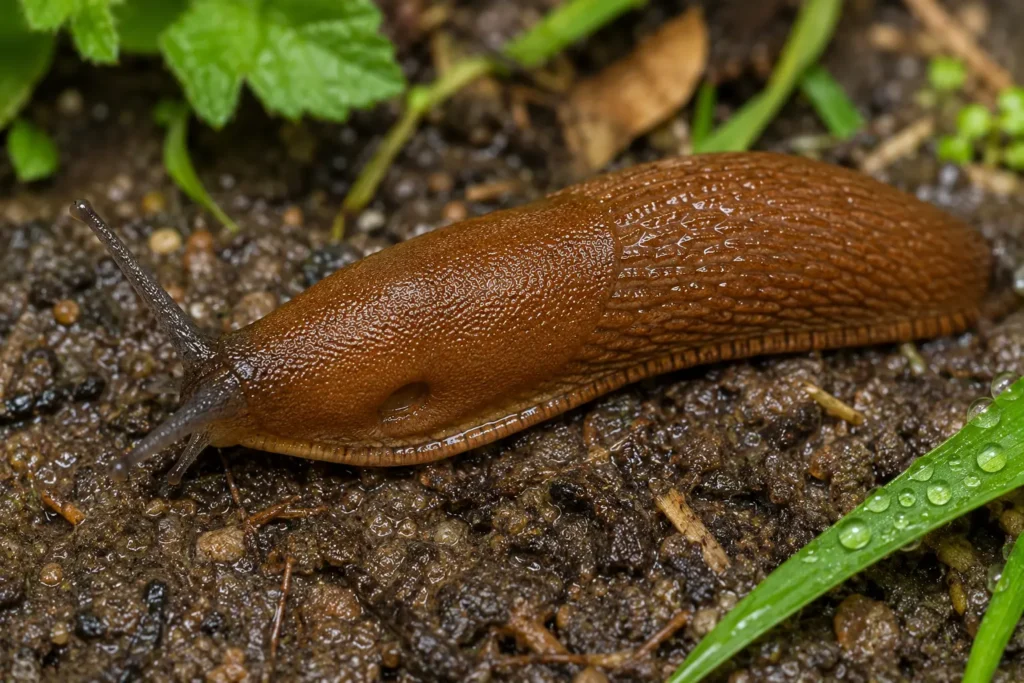
Many people wonder, “Are slugs snails without shells?” The answer is partly true. Scientists believe that modern slugs evolved from shelled ancestors. Some species still have tiny internal shell remnants hidden beneath their skin, while others have completely lost their shells over millions of years.
Without the protection of a shell, slugs rely on camouflage, sticky mucus, and damp environments to survive. Their long, flexible bodies allow them to squeeze into tiny cracks and spaces that many snails cannot reach.
Main Characteristics of a Slug
-
Usually no external shell
-
Long, soft body
-
Thick protective slime
-
Two pairs of tentacles
-
Muscular foot
-
Prefers damp environments
-
Mostly active at night or after rain
Snail vs Slug: Difference Between Snail and Slug
The snail vs slug comparison becomes much easier when you understand their physical features and survival strategies.
| Feature | Snail | Slug |
|---|---|---|
| External Shell | Large spiral shell | Usually no external shell |
| Internal Shell | No | Some species have tiny internal shells |
| Protection | Retracts into shell | Uses slime and camouflage |
| Body Shape | Compact | Long and flexible |
| Moisture Loss | Less | More |
| Habitat | Moist and moderately dry places | Very damp places |
| Defense | Hard shell | Sticky slime and hiding |
| Movement | Slow | Slightly more flexible |
| Appearance | Rounded | Elongated |
| Survival Strategy | Shell protection | Camouflage and moisture |
Are Slugs Snails Without Shells?
One of the most searched questions online is,Are slugs snails without shells?
Both snails and slugs belong to the same scientific class called Gastropoda, which means they share a common ancestor. Over millions of years, different groups evolved in different ways.
Many slug species gradually reduced or completely lost their external shells because a shell-free body helped them move through narrow spaces, hide more effectively, and adapt to damp environments.
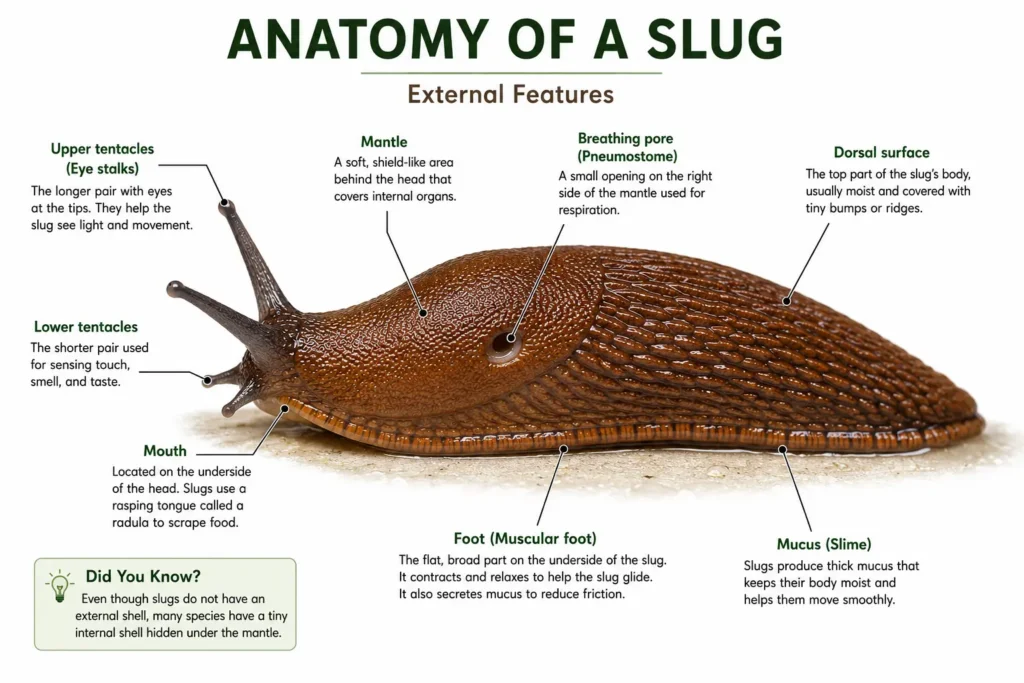
Some slugs still have tiny internal shells hidden inside their bodies, showing their evolutionary connection to snails.
So, although slugs are closely related to snails, they are not simply “snails without shells.” They are specialized gastropods with unique adaptations.
Is a Slug a Snail?
Another common question is:Is a slug a snail?
Scientifically, both animals belong to the class Gastropoda.
In everyday language, however:
-
Animals with visible external shells are called snails.
-
Animals without visible external shells are called slugs.
So, while they are close relatives, they are recognized as different types of gastropods.
Snail vs Slug: Are Snails and Slugs the Same?
Although they look similar, snails and slugs are not the same.
They share many characteristics:
-
Both are mollusks.
-
Both belong to Gastropoda.
-
Both produce slime.
-
Both move using a muscular foot.
-
Both have tentacles.
-
Both use thousands of tiny teeth on a ribbon-like tongue called a radula to scrape food.
-
Both lay eggs.
However, they differ in shell structure, moisture needs, body shape, and survival methods.
Why Do Snails Have Shells but Slugs Don’t?
A snail’s shell provides several important advantages:
-
Protects against predators
-
Reduces water loss
-
Provides shelter during hot weather
-
Helps survive dry conditions
Slugs evolved differently.
Without carrying a heavy shell, they can:
-
Fit into tiny spaces
-
Hide beneath rocks and logs
-
Move more freely
-
Conserve energy needed to build and maintain a shell
Instead of a shell, slugs rely on sticky mucus and camouflage for protection.
Habitat and Distribution
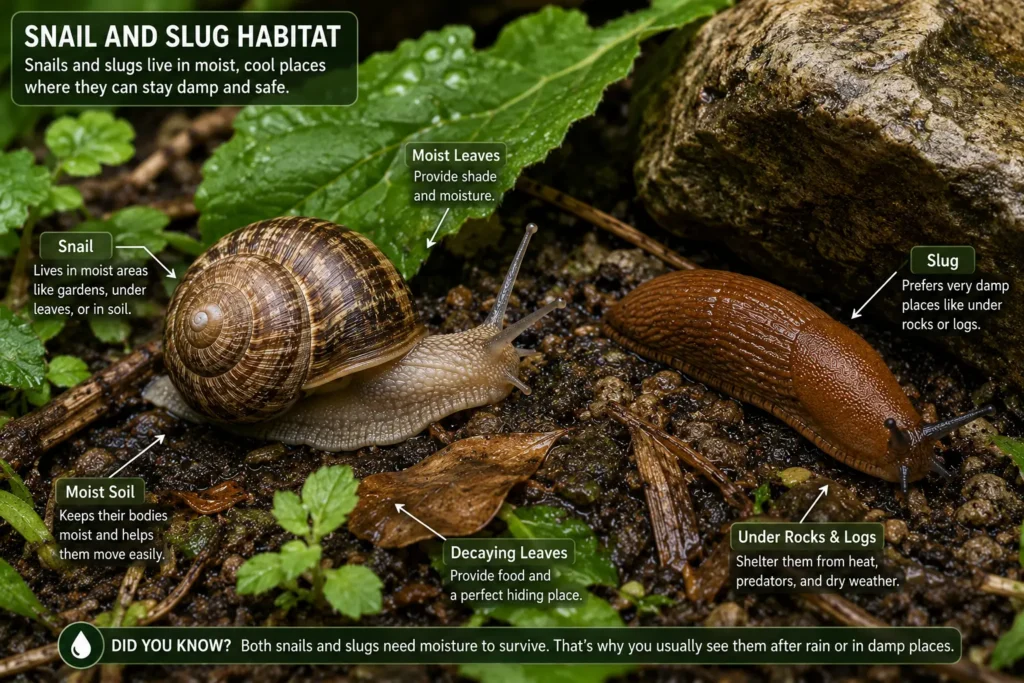
The snail vs slug difference is also noticeable in the environments they prefer. Both animals need moisture, but slugs generally depend more heavily on damp, shaded places.
They commonly live in:
-
Gardens
-
Forests
-
Grasslands
-
Wetlands
-
Compost piles
-
Under rocks
-
Beneath fallen leaves
-
Around ponds and streams
Snails can survive in slightly drier environments because their shells help retain moisture.
Slugs usually remain in damp, shaded places where they are less likely to dry out.
What Do Snails and Slugs Eat?
Most land snails and slugs are herbivores and decomposers.
Their diet includes:
-
Leaves
-
Flowers
-
Fruits
-
Vegetables
-
Mushrooms
-
Algae
-
Moss
-
Dead plant material
Some larger slug species even eat insects, worms, or other slugs.
Because they feed on decaying plants, they help recycle nutrients back into the soil.
How Do They Move?
Both animals move using a large muscular foot.
As they glide forward, glands beneath their bodies produce slime.
This mucus:
-
Reduces friction
-
Protects their skin
-
Helps them climb rough surfaces
-
Prevents injuries
-
Leaves the shiny trails often seen on sidewalks and garden paths after rain
Predators and Defense
Another important snail vs slug difference is how they protect themselves from predators.
Their predators include:
-
Birds
-
Frogs
-
Toads
-
Hedgehogs
-
Beetles
-
Snakes
-
Turtles
-
Small mammals
Snails defend themselves by hiding inside their shells.
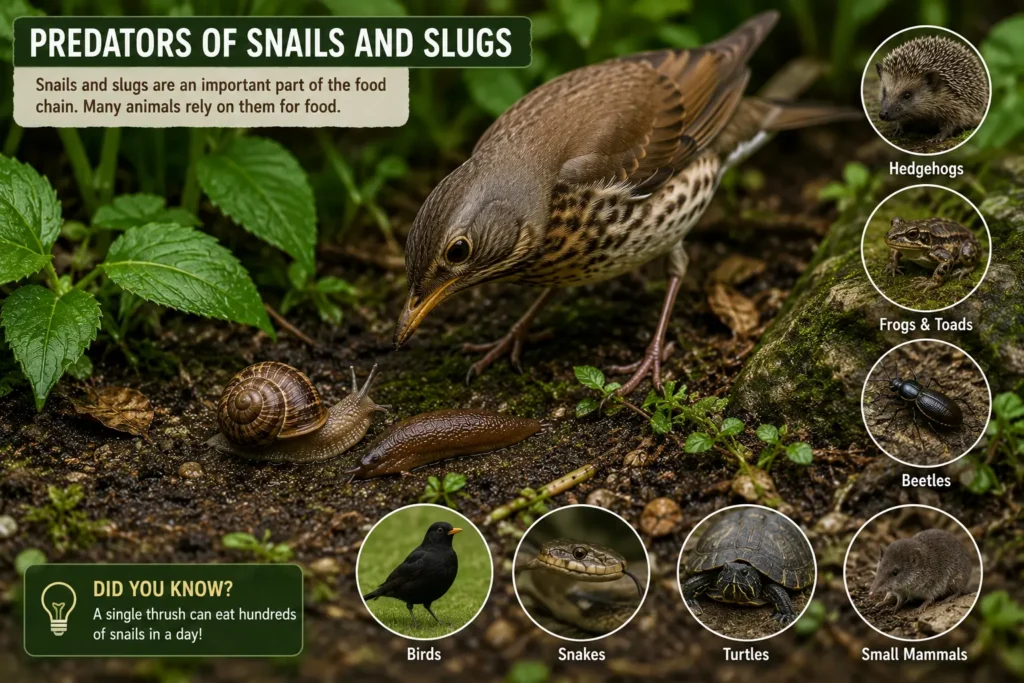
Slugs protect themselves using thick mucus and camouflage to avoid predators and by remaining active mostly at night.
Life Cycle
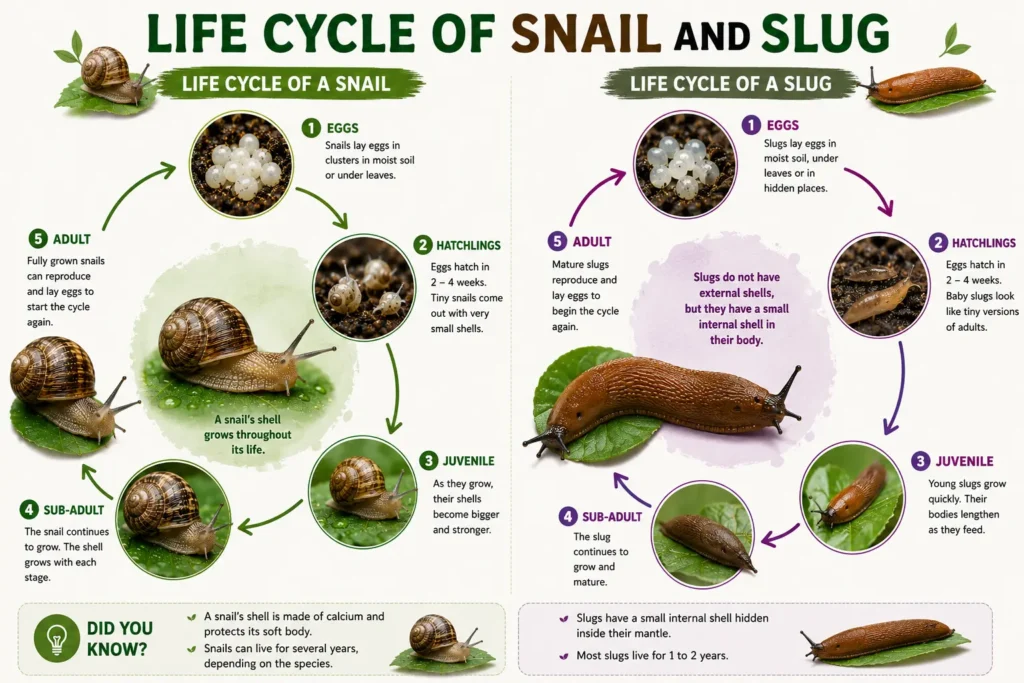
Both snails and slugs usually reproduce by laying eggs in moist soil.
Their life cycle follows four stages:
-
Egg
-
Hatchling
-
Juvenile
-
Adult
Young snails hatch with tiny transparent shells that become stronger as they grow.
Why Are Snails and Slugs Important?
Although gardeners sometimes see them as pests, they play an important role in ecosystems.
They help:
-
Break down dead plants
-
Recycle nutrients
-
Improve soil health
-
Feed birds and other wildlife
-
Support biodiversity
Without snails and slugs, forests and gardens would lose important decomposers that keep nature balanced.
Amazing Facts About Snails and Slugs
-
A snail cannot leave its shell because the shell is attached to its body.
-
Some snails can sleep for several months during dry weather.
-
Slugs have thousands of microscopic teeth on a ribbon-like tongue called a radula.
-
Banana slugs can grow over 20 cm (8 inches) long.
-
Some sea slugs are brightly colored and can even use toxins from their prey for protection.
-
Garden snails can live for several years under suitable conditions.
Frequently Asked Questions
What is the difference between a snail and a slug?
The biggest difference is that snails have a visible external shell, while most slugs do not.
Are slugs snails without shells?
They are closely related, but slugs evolved from shelled ancestors and developed different adaptations over millions of years.
Is a slug a snail?
Both belong to the class Gastropoda, but they are commonly distinguished by the presence or absence of a visible shell.
Is a snail a slug?
No. A snail is a gastropod with a visible external shell.
Are snails and slugs the same?
No. They share many characteristics but differ in anatomy, habitat preferences, and survival strategies.
Which is faster: a snail or a slug?
Both are slow-moving animals, but some slugs can move slightly faster because they do not carry a heavy shell.
Conclusion
Understanding the snail vs slug difference helps us appreciate how these closely related gastropods have adapted to different environments. Snails protect themselves with their hard spiral shells, while slugs rely on camouflage, sticky mucus, and damp environments for survival. Although they look different, both belong to the class Gastropoda and play an important role in maintaining healthy ecosystems by recycling nutrients and serving as food for many animals.
Whether you find a slug or snail in your garden, remember that these gentle creatures are valuable members of nature. Learning about their similarities and differences helps us better appreciate the incredible diversity of life on Earth.