Why Do Penguins Waddle?
While observing a penguin walking around on ice, one may ask a question Why do penguins waddle? In fact, this funny sideways movement serves an important function for the bird.
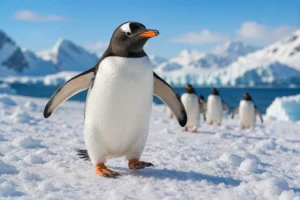
First of all, penguins are characterized by short legs, stout bodies and feet which are situated near the rear part of the body. This physical structure is good for swimming but not so convenient for walking on the ground. However waddling provides penguins with the ability to go ahead in a balanced way, saving their energy at the same time.
In other words, this funny movement plays an important role in the movement of these birds.
Reason for waddling:
The reason behind waddling of penguins lies in their anatomical construction. These animals have short legs and their feet are placed far away behind. As soon as a penguin makes a step, he shifts its weight from one side to another one, creating the side-to-side movements that are known as waddling. It should be noted that unlike those animals having long legs and able to make big steps, penguins’ bodies are specially constructed for swimming and diving.
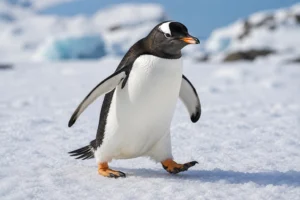
Though walking is not their strong side, their waddle is perfectly adjusted to their needs.
What Is called Penguins Walk?
The walk of a penguin is called a waddle. Why do penguins waddle? Penguins is waddling because it moves one foot after another and simultaneously moves its body side by side. This kind of movement might seem clumsy comparing to the elegant movements penguins demonstrate while swimming. The term “waddle” just denotes such kind of clumsy and slow gait of an animal.
How do penguins walk?
Penguins make small steps and move their body weight from one foot to the other. The feet act as support for the penguins’ bodies while the legs enable them to make a step. Since their legs are attached towards the back end of the body, they do not walk in the same manner as humans or most other birds. Rather, the body rocks sideways as it walks. This is the reason a penguin’s walking movement can look like sideways movement with each step.
Does waddling help penguins conserve energy?
Yes, waddling helps penguins to move effectively. Research on the mode of movement of penguins has revealed that the unique movement pattern that penguins have involves the use of the body’s natural movements. When a penguin rocks from side to side, energy used in one step helps it in the other step. This is because at times penguins have to walk either on land or on ice when traveling between their nesting places and the water. There is no reason for a penguin to walk the way humans walk; their waddle is just an effective way of moving for them.
How Penguins Maintain Their Balance?
The surface of ice and snow is skiddy. Side steps help penguins shift their weight with every step taken by them. Moreover, their feet act as a stable platform while walking.
Why penguins dont Fly?
penguins are considered as bird but they cannot fly. Through transformation,their wings became strong paddle suitable for swimming. Moreover, they developed a shape that helped them swim better in water. Hence, penguins don’t use their wings for flying in the air.So, why do penguins waddle instead of walking like other birds? Rather, they use them for “flying” in water. Therefore, their body structure is more suitable for swimming than walking. This is one reason why penguins seem clumsy on the ground but highly quick in water.
How Do Penguins Move?
There are a few modes of penguins’ locomotion, and they depend on the place where penguins live. On the land, they can walk or waddle. Also, some kinds of penguins can even climb over rocky and uneven areas. On the ice, penguins can have an interesting way of locomotion known as tobogganing. This kind of movement means that the animal lies on its stomach and moves using its feet and flippers. And in the water, there is a complete difference, and penguins use their strong flippers for swimming and feet and tails for steering. mode of a penguin’s movement depends on its habitat.
Penguins have many fascinating adaptations that help them survive in challenging environments. You can also learn how other animals use special adaptations in our article How Animals Use Camouflage to Stay Safe.
Why Do Penguins Slide on Their Bellies?
penguin slides on the stomach on the ice is known as tobogganing. Instead of waddling step-by-step, a penguin can slide on the stomach and propel itself by the help of its feet and flippers.
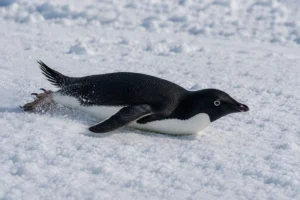
It can also be a good mode of travel over certain surfaces of ice. Also, tobogganing can help to move faster than usual walking in some cases.
Why Do Penguins StandStill?
On some reasons, a penguin is standstill for a period of time.penguins are standing still does not mean they are unfit. They maybe resting with other members or waiting before continue their journey. penguins spend most of the time standing around in colonies at different stages of lives.
Why Penguins Stand With Wings Out?
Many times, you see a penguin that is standing with its wings outstretched. The reason why penguins do so is that they help themselves in maintain their body temperatures.
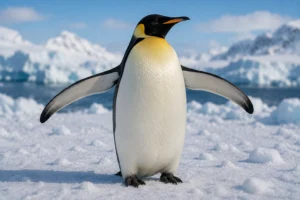
Penguins feathers helps to keep them well-insulated, which is necessary for colder habitat, though the birds get hot, particularly when they are active in the sun’s rays. Standing with the wings stretched helps them to lose their body heat. Therefore, seeing a penguin standing with its “wings” out doesn’t mean anything too serious.
Why Do Penguin Have a Limp?
The penguin’s walk might appear like a limp due to the side-to-side motion of its body. A regular waddle of a penguin is not a limp since the latter is a result of an injury. The weight of a penguin is constantly shifted during walking due to its body structure and position of legs. The movement of the penguin with a problem will differ from a natural walk of a healthy bird.
Difference Between Penguin Walking and Swimming
On land penguin can be seen as a clumsy but when it enters the water, it becomes a skillful swimmer.
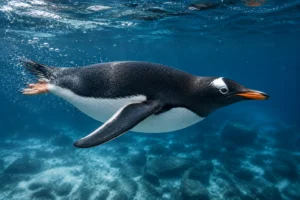
Penguins’ flippers function as wings under the water helping them to move and its body helps to reduce resistance. Feet and tail play a significant role in navigation.
A Fun Penguin Fact
The Emperor Penguin is the worlds living penguin. The adult emperor penguin is usually around 1.2 meters ( 4 feet) in height.
Even though the penguin is big in size it still retains its waddling manner of walking on land.
Think of a four-feet tall penguin waddling on the ice!
FAQs
Why do penguins waddle?
The penguin waddles because of its body structure, its short legs and the location of its feet. The side to side movement makes it easier for the penguin to balance itself on land.
What is penguin walk called?
The distinctive side, to side walk of a penguin is known as waddle.
How do penguins move?
Penguins move through walking and waddling on land and also moving using their wings in the water, and some species can toboggan through ice and snow.
Why do penguins move by this manner?
Penguins move like this because their bodies structure suits for swimming. With short legs and backward feet position is natural to move this way when they are on land. Why
Do Penguins Slides on their Bellies?
some penguins slide through the ice and snow on their bellies is called as tobogganing .
Do penguins walk more often than swim?
The majority of a penguin’s life is spent in the ocean where it is very efficient compared to its clumsiness on land. The bodies of penguins are adapted for swimming.
So, What Makes Penguins Waddle?
Penguins waddle because of their structure which makes walking difficult and favors them in swimming. Short legs,body structure and backward pointing feet make waddling the easiest way for penguins to walk. This waddling is funny to us humans but it is a very smart mechanism helping penguins to keep their balance and walk in efficient manner. So, if you will ever see a waddling penguin, now you know why they do that